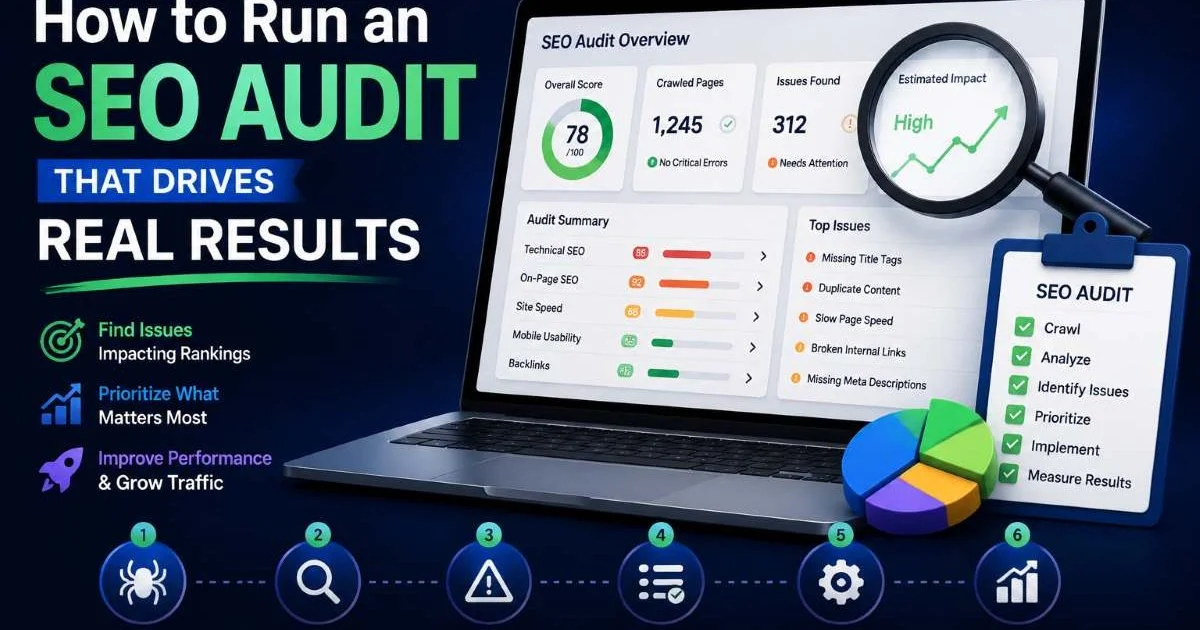
An SEO audit is the diagnostic backbone of every successful search strategy, yet most teams treat it like a checkbox exercise. They run a crawl, skim the errors, fix a few meta tags, and move on.
Six months later, traffic is flat and nobody knows why. This case study follows a mid-size e-commerce brand (which we will call "GreenGear") that was stuck on page two for nearly all of its target terms.
After a structured, data-driven SEO audit, the team turned a stagnant site into one that captured 74% more organic sessions in under five months. If you want to understand what SEO analysis really means and how it works, this story shows exactly what that looks like in practice. The stakes are straightforward: audit well and grow, or audit poorly and waste budget.
Key Takeaways
- A thorough SEO audit uncovers technical, content, and backlink issues simultaneously.
- GreenGear's organic traffic grew 74% within five months of implementing audit findings.
- Keyword research revealed 120 untapped long-tail terms with low competition.
- Fixing crawl errors and page speed lifted average ranking positions by 12 spots.
- Backlink analysis exposed 340 toxic links that were suppressing domain authority.
The Problem: Declining Visibility Despite Consistent Publishing
GreenGear sells sustainable outdoor equipment. The marketing team had been publishing two blog posts per week for over a year, yet organic traffic had plateaued at around 18,000 sessions per month. Paid search was eating into margins, and the CEO wanted organic to carry more weight. Despite having 400+ indexed pages, fewer than 30 ranked in the top 20 for any meaningful keyword.
The team assumed their content was the issue. They hired freelancers, rewrote product descriptions, and added FAQ sections. Nothing moved the needle. What they had not done was look under the hood. A proper technical and strategic audit had never been performed, which meant problems were compounding invisibly. Crawl errors, duplicate content, and orphaned pages were dragging the entire domain down.
When GreenGear approached us, we proposed a full-scope audit covering technical infrastructure, on-page SEO, content gaps, and link health. The goal was not just a report; it was a prioritized action plan tied to measurable outcomes. We set a five-month window to prove ROI.
The SEO Audit Process: What We Actually Did
Technical Crawl and Site Health
We started with a deep technical crawl using Screaming Frog and paired it with Google Search Console data. The results were alarming. GreenGear had 1,247 URLs returning 4xx errors, 83 redirect chains longer than three hops, and a mobile page speed score averaging 34 out of 100. Core Web Vitals were failing on Largest Contentful Paint for 61% of pages, mostly due to uncompressed hero images and render-blocking JavaScript.
We also discovered that the site's XML sitemap included 190 URLs that were either noindexed or returning errors, sending mixed signals to Googlebot. Canonical tags were inconsistent across product variants, which created duplicate content issues for roughly 15% of the catalog. These are the kinds of problems that no amount of new content will fix.
Never submit URLs in your sitemap that are noindexed or broken. This wastes crawl budget and confuses search engines.
Keyword and Content Gap Analysis
The next phase focused on keyword research. We pulled GreenGear's existing ranking data, then compared it against three direct competitors using Ahrefs. The gap analysis revealed 120 long-tail keywords where competitors ranked in positions one through ten but GreenGear had no presence at all. Many of these terms had monthly search volumes between 200 and 1,500, representing real commercial intent. For anyone starting from scratch, this step-by-step keyword research guide walks through the exact methodology we used.
We also found that 47 existing blog posts targeted overlapping keywords, creating internal cannibalization. Three separate articles competed for "best eco-friendly camping gear," and none ranked above position 40. Content consolidation became a clear priority, along with building new pages for the uncovered ranking opportunities. The strategy for finding SEO ranking opportunities in your niche proved especially relevant here.
Use a keyword clustering tool to group semantically related terms before writing. This prevents cannibalization from day one.
Backlink Profile Review
Backlink analysis was the third major pillar of the audit. GreenGear had accumulated roughly 2,800 referring domains over four years, but quality was mixed. We identified 340 links from spammy directories, link farms, and foreign-language sites with no topical relevance. These toxic links were likely suppressing the domain's authority. For a deeper look at evaluating link quality, this guide on backlink analysis and link profile evaluation covers the criteria we applied.
On the positive side, GreenGear had earned natural links from outdoor magazines and sustainability blogs that were never amplified. We flagged 28 high-authority pages linking to GreenGear's homepage that could be redirected to more relevant product or category pages, passing link equity where it mattered most. This alone represented a significant untapped asset.
Implementation: Turning Findings Into Action
On-Page SEO Fixes
We prioritized actions using a simple impact-versus-effort matrix. High-impact, low-effort fixes came first: resolving crawl errors, compressing images, and fixing canonical tags. Within the first two weeks, the team cleared all 1,247 broken URLs and consolidated redirect chains down to single-hop 301s. Mobile speed scores jumped from 34 to 72 after implementing lazy loading and deferring non-critical JavaScript.
Content consolidation happened next. The 47 cannibalized posts were merged into 18 comprehensive guides, each targeting a distinct keyword cluster. We rewrote title tags, meta descriptions, and H1s to align with search intent rather than internal product jargon. Internal linking was restructured so that every product category page received contextual links from at least three supporting blog posts. Industries that rely heavily on organic search, like those outlined in this breakdown of top SEO-driven industries, tend to see the fastest results from this type of restructuring.
When merging cannibalized content, always 301-redirect the retired URLs to the consolidated page to preserve any existing link equity.
New content was created for 35 of the 120 gap keywords identified during the audit. Each piece followed a brief that specified primary keyword, secondary terms, target word count, internal linking targets, and search intent classification. We focused first on keywords with commercial or transactional intent because those directly supported revenue goals.
Link Cleanup and Outreach
We submitted a disavow file covering the 340 toxic backlinks and began outreach to reclaim lost links from sites that had removed or broken their references to GreenGear. Of 52 outreach emails sent, 19 resulted in restored or updated links. Simultaneously, we pitched guest posts to three outdoor publications, earning five new high-authority backlinks pointing to category pages rather than the homepage.
Privacy and compliance also played a role. GreenGear operated in the EU market, so we reviewed their cookie consent and data handling practices against current AI privacy compliance standards to make sure tracking scripts would not create legal exposure or interfere with analytics accuracy. Clean data meant better attribution of SEO performance.
Disavow files typically take four to six weeks to reflect in Google's assessment of your link profile. Do not expect overnight changes.
| Action Item | Impact | Effort | Timeline |
|---|---|---|---|
| Fix crawl errors (1,247 URLs) | High | Low | Week 1 to 2 |
| Improve mobile page speed | High | Medium | Week 2 to 3 |
| Consolidate cannibalized content | High | Medium | Week 3 to 6 |
| Disavow toxic backlinks | Medium | Low | Week 2 |
| Create new gap content (35 pages) | High | High | Week 4 to 16 |
| Outreach for link reclamation | Medium | Medium | Week 4 to 10 |
Results: The Numbers After Five Months
Five months after the SEO audit was completed and the action plan executed, GreenGear's organic sessions climbed from 18,000 to 31,320 per month, a 74% increase. The number of keywords ranking in the top ten grew from 30 to 187. Average position across all tracked terms improved by 12 spots, moving from a median of 34 to 22. These were not vanity metrics; revenue attributed to organic search rose 41% over the same period.
The most dramatic gains came from the consolidated content pages. The merged "eco-friendly camping gear" guide, for example, moved from position 40+ to position 6 within eight weeks and now generates over 1,200 sessions per month on its own. New gap content also performed well: 12 of the 35 new pages ranked in the top 20 within the first three months, with four reaching page one.
"The audit did not just find problems. It revealed a clear roadmap that turned stagnation into measurable, month-over-month growth."
Backlink health improved measurably too. Domain Rating (per Ahrefs) increased from 38 to 44 after the disavow and outreach efforts. The ratio of high-quality to low-quality referring domains shifted from roughly 60/40 to 80/20. More importantly, new links started appearing organically as the improved content attracted citations from bloggers and journalists covering sustainability topics.
Page speed remained stable at a mobile score of 70+, and Core Web Vitals passed for 94% of pages compared to 39% at baseline. The technical foundation held because the team integrated ongoing monitoring into their workflow rather than treating the audit as a one-time event. GreenGear now runs a quarterly mini-audit to catch regressions early.
Frequently Asked Questions
?How do you fix redirect chains longer than three hops?
?Is Screaming Frog enough or do you also need Search Console data?
?How long does a full-scope SEO audit take before results show?
?Why did GreenGear's traffic plateau even with 400+ indexed pages?
Final Thoughts
GreenGear's story is not exceptional. It is repeatable. The difference between a performative SEO audit and one that drives real results comes down to scope, prioritization, and follow-through.
Technical fixes create the foundation, keyword and content strategy point you in the right direction, and backlink hygiene removes the drag holding you back. If your organic traffic has plateaued, the answer is almost certainly hiding in the data you have not examined yet.
Disclaimer: Portions of this content may have been generated using AI tools to enhance clarity and brevity. While reviewed by a human, independent verification is encouraged.