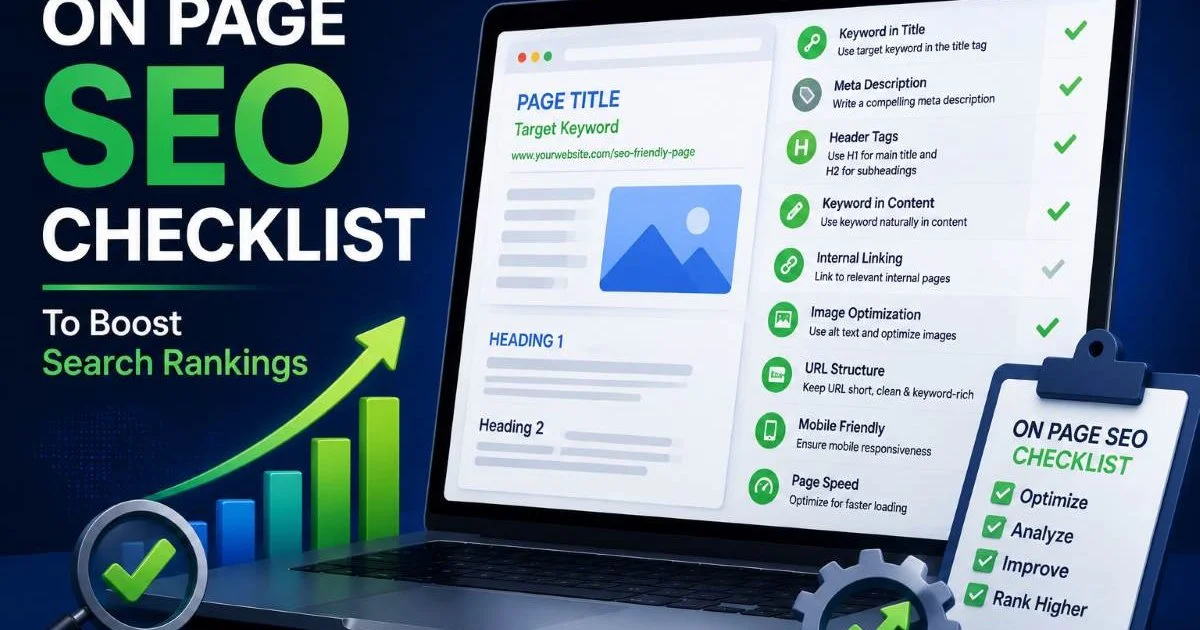
On page SEO is the foundation of every successful search strategy, yet it remains one of the most overlooked areas by teams chasing backlinks and technical fixes.
Every element you control directly on your web pages, from title tags and headers to internal links and image optimization, sends signals to search engines about your content's relevance and quality. When these signals align with user intent, your pages climb. When they don't, even the best content sits buried on page two.
This checklist breaks down the specific, actionable steps that digital marketers and SEO specialists need to follow in 2024 and beyond. Whether you're optimizing an existing page or building new content from scratch, understanding what SEO analysis is and how it works will give you the analytical backbone for every item on this list. Think of this guide as your operating manual for pages that rank.
Key Takeaways
- Title tags and meta descriptions directly influence click-through rates from search results.
- Strategic keyword placement matters more than keyword density or stuffing.
- Internal linking distributes authority and helps search engines crawl your site efficiently.
- Page speed and Core Web Vitals are confirmed ranking factors you can measure today.
- Structured data markup increases your chances of earning rich snippets in SERPs.
1. Optimize Title Tags and Meta Descriptions
Writing Titles That Earn Clicks
Your title tag is the single most impactful on page SEO element you can control. Google uses it as a primary relevance signal, and searchers use it to decide whether your result deserves a click. Keep titles under 60 characters to avoid truncation in search results. Place your primary keyword near the front of the tag, but write for humans first. A title like "On Page SEO Checklist: 15 Steps to Higher Rankings" performs better than keyword-stuffed alternatives because it communicates clear value.
Avoid duplicating title tags across multiple pages on your site. Each page should target a unique primary keyword and reflect distinct content. When two pages share similar titles, search engines struggle to determine which one to rank, and both can suffer. Use your CMS or an SEO plugin to audit for duplicate titles at least once per quarter. If you're running a full site review, learning how to run an SEO audit that drives real results will help you catch these issues systematically.
Crafting Meta Descriptions
Meta descriptions don't directly affect rankings, but they heavily influence click-through rate, which does affect rankings over time. Write descriptions between 150 and 155 characters that include your target keyword naturally and end with a clear call to action. Phrases like "Learn how," "Get the checklist," or "See what's working" create urgency without being pushy. Google sometimes rewrites your meta description, but a well-crafted one is used more often than a missing one.
Add your brand name to the end of meta descriptions on key landing pages to build recognition in SERPs.
Test your meta descriptions against competitors by searching your target keyword and reading the top ten results. Notice which descriptions stand out and compel action. If yours reads like every other result, rewrite it with a specific benefit or a number. For example, "Follow this 15-step on page SEO checklist used by top-ranking sites to fix common issues fast" outperforms generic alternatives every time.
2. Nail Keyword Placement and Content Structure
Header Hierarchy and Keyword Mapping
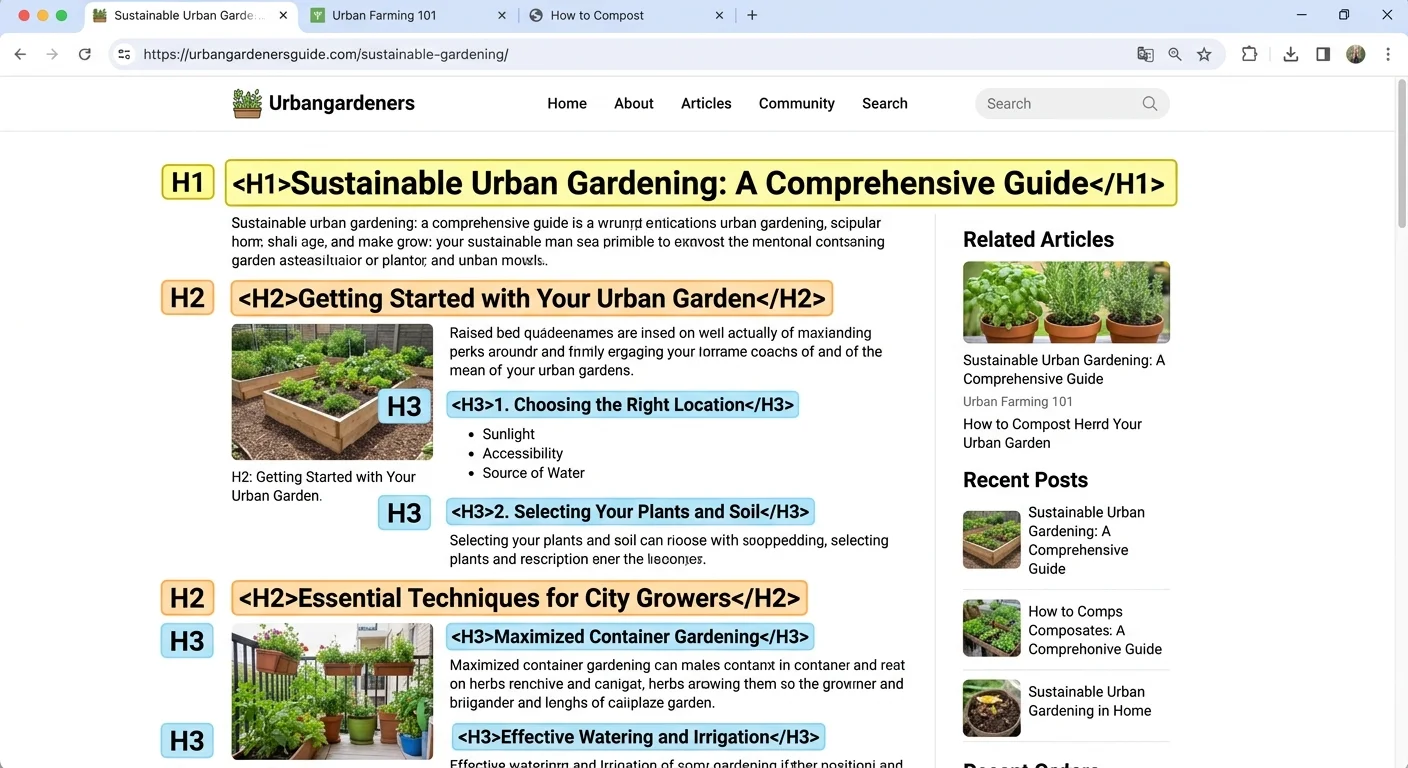
Proper header hierarchy gives search engines a clear roadmap of your content. Use a single H1 per page that contains your primary keyword. Subsequent H2s should break the content into logical sections, each targeting a related subtopic or secondary keyword. H3s work well for sub-points within those sections. This structure isn't just for SEO; it improves readability and keeps users scrolling. If you're still learning how to identify the right keywords, this keyword research guide for beginners walks through the entire process step by step.
Map each header to a specific search intent. Informational headers work for top-of-funnel queries, while comparison or "how to" headers match mid-funnel intent. Don't create headers just to stuff keywords into them. Every heading should promise something the paragraph beneath it actually delivers. Broken promises lead to pogo-sticking, which signals poor relevance to Google's ranking systems.
Body Content Best Practices
Place your primary keyword in the first 100 words of your body content. Use it again two or three more times throughout the piece, but only where it fits naturally. Keyword density isn't a ranking factor in 2024; topical coverage and semantic relevance are. Tools like Surfer SEO or Clearscope can help you identify related terms and entities that Google expects to see on a page targeting your keyword. Including those terms strengthens your content's topical authority without resorting to repetition.
Break up long paragraphs and use visual variety to keep engagement high. Bullet points, numbered lists, tables, and bold text all help scanners find what they need. Google's helpful content system favors pages that satisfy user intent quickly. Write paragraphs that each contribute a new idea, and cut anything that merely restates what you've already said. Short sentences hit hard. Longer ones add nuance and depth. Alternate between the two.
"The best on page SEO isn't about pleasing algorithms; it's about building pages that genuinely answer the searcher's question better than anyone else."
3. Strengthen Internal Links and URL Structure
Internal Linking Strategy
Internal links are one of the most underused on page SEO tactics available. Every time you link from one page to another on your site, you pass authority and help search engines understand your site's topic clusters. Aim for three to five internal links per 1,000 words of content, using descriptive anchor text that tells both users and crawlers what the target page covers. Avoid generic anchors like "click here" or "read more." Instead, weave the link into a natural sentence, the way you'd reference a colleague's work in conversation.
Prioritize linking to pages that need a ranking boost. If you have a high-authority blog post, link from it to newer or underperforming content. This strategy redistributes link equity across your site. You can find SEO ranking opportunities in your niche by identifying pages that sit on positions 6 through 20 and giving them more internal link support. Many teams overlook this tactic in favor of building external backlinks, but internal links are free and fully within your control.
Orphan pages (those with zero internal links pointing to them) are essentially invisible to search engines. Audit for them quarterly.
URL Structure Guidelines
Clean, descriptive URLs contribute to both user experience and search engine understanding. Keep URLs short, ideally under 75 characters, and include your target keyword. Use hyphens to separate words, not underscores. Avoid dynamic parameters, session IDs, and unnecessary folder depth. A URL like /blog/on-page-seo-checklist outperforms /blog/2024/05/post?id=4827 because it communicates content meaning at a glance.
Once a URL is live and indexed, avoid changing it unless absolutely necessary. Every URL change requires a 301 redirect, and even well-implemented redirects lose a small amount of link equity. If you do restructure URLs, update all internal links to point directly to the new destination rather than relying on redirect chains. Also, make sure your site runs on a properly configured SSL certificate, because TLS certificate errors can hurt your SEO by triggering browser warnings that spike bounce rates.
4. Improve Page Speed and Technical On Page Elements
Core Web Vitals Checklist
Google's Core Web Vitals are three metrics that measure real-world user experience: Largest Contentful Paint (LCP), Interaction to Next Paint (INP), and Cumulative Layout Shift (CLS). Each metric has a specific threshold you need to hit for a "good" score. Falling below these thresholds doesn't guarantee a ranking drop, but passing them gives you a competitive edge, especially in tight keyword races. Run your pages through PageSpeed Insights and Chrome User Experience Report to get field data.
| Core Web Vital | What It Measures | Good Threshold | Common Fix |
|---|---|---|---|
| LCP | Loading performance | ≤ 2.5 seconds | Optimize images, use CDN |
| INP | Interactivity | ≤ 200 milliseconds | Reduce JavaScript execution |
| CLS | Visual stability | ≤ 0.1 | Set image dimensions, avoid injected content |
Compress images using WebP or AVIF formats and implement lazy loading for images below the fold. Minimize render-blocking CSS and JavaScript by deferring non-critical resources. Use a content delivery network (CDN) to serve assets from servers geographically closer to your visitors. These fixes don't require a complete site rebuild; most can be implemented incrementally over a few sprints. An SEO analyzer tool can help you turn data into authority by identifying which pages need the most urgent performance improvements.
Lazy loading your LCP image (usually the hero image) will actually hurt your LCP score. Only lazy load images below the fold.
Schema and Structured Data
Structured data markup helps search engines understand your content's context and can earn you rich snippets in search results. Implement JSON-LD schema for article pages, FAQ sections, how-to guides, product pages, and review content. Google's Rich Results Test tool lets you validate your markup before deploying it. Pages with rich snippets earn significantly higher click-through rates because they take up more visual space in search results and display additional information like ratings, prices, or step counts.
Don't add schema markup for content that doesn't exist on the page. Google penalizes misleading structured data, and it can result in manual actions that suppress your entire site. Start with the schema types most relevant to your content, then expand as you add new page templates. Test every implementation with Google's structured data testing tools, and monitor the Enhancements report in Google Search Console for errors and warnings that might prevent rich results from appearing.
Set a monthly reminder to check Google Search Console's Enhancements tab for new structured data errors as Google updates its requirements.
Frequently Asked Questions
?How often should I audit title tags for duplicates?
?Do meta descriptions directly improve my Google rankings?
?How long does on page SEO take to show ranking results?
?Is keyword density still important when optimizing body content?
Final Thoughts
On page SEO isn't a one-time project; it's an ongoing discipline that compounds over time. The checklist above covers the highest-impact optimizations you can make today, from title tags and keyword placement to page speed and structured data.
Prioritize the items where your pages currently fall short, and track the results in Google Search Console over 30 to 60 days. Small, consistent improvements across dozens of pages will move the needle far more than a single dramatic overhaul. Treat every page as a product worth refining, and the rankings will follow.
Disclaimer: Portions of this content may have been generated using AI tools to enhance clarity and brevity. While reviewed by a human, independent verification is encouraged.